
The Duravant family of operating companies serve the food processing, packaging and material handling segments.
















Truck Loading Conveyors
When it comes to loading docks and high traffic shipping/receiving areas, keeping your supply chain logistics organized is a top priority. Unfortunately, many distributors waste time and countless resources attempting to meet the strict deadlines and turnaround requirements for order fulfillment.
From retail stores to distribution centers and all types of operations, FMH’s conveyor belts for loading trucks are designed to optimize your loading dock operations. Just like our telescopic belt conveyors, these truck loaders are extendable in order to reach deep into semi-trucks and trailers for the efficient loading of boxes and materials.
A truck loading conveyor can help maintain a consistent flow of products between the facility and trailer while reducing the amount of manual handling required at the dock. For distribution centers and other high-volume shipping operations, this can help employees spend less time carrying products or walking between loading points. The result is a more efficient loading and unloading process that helps keep goods moving during demanding shipping and receiving periods.
Aftersort Rigid Two-Stage Truck Loader
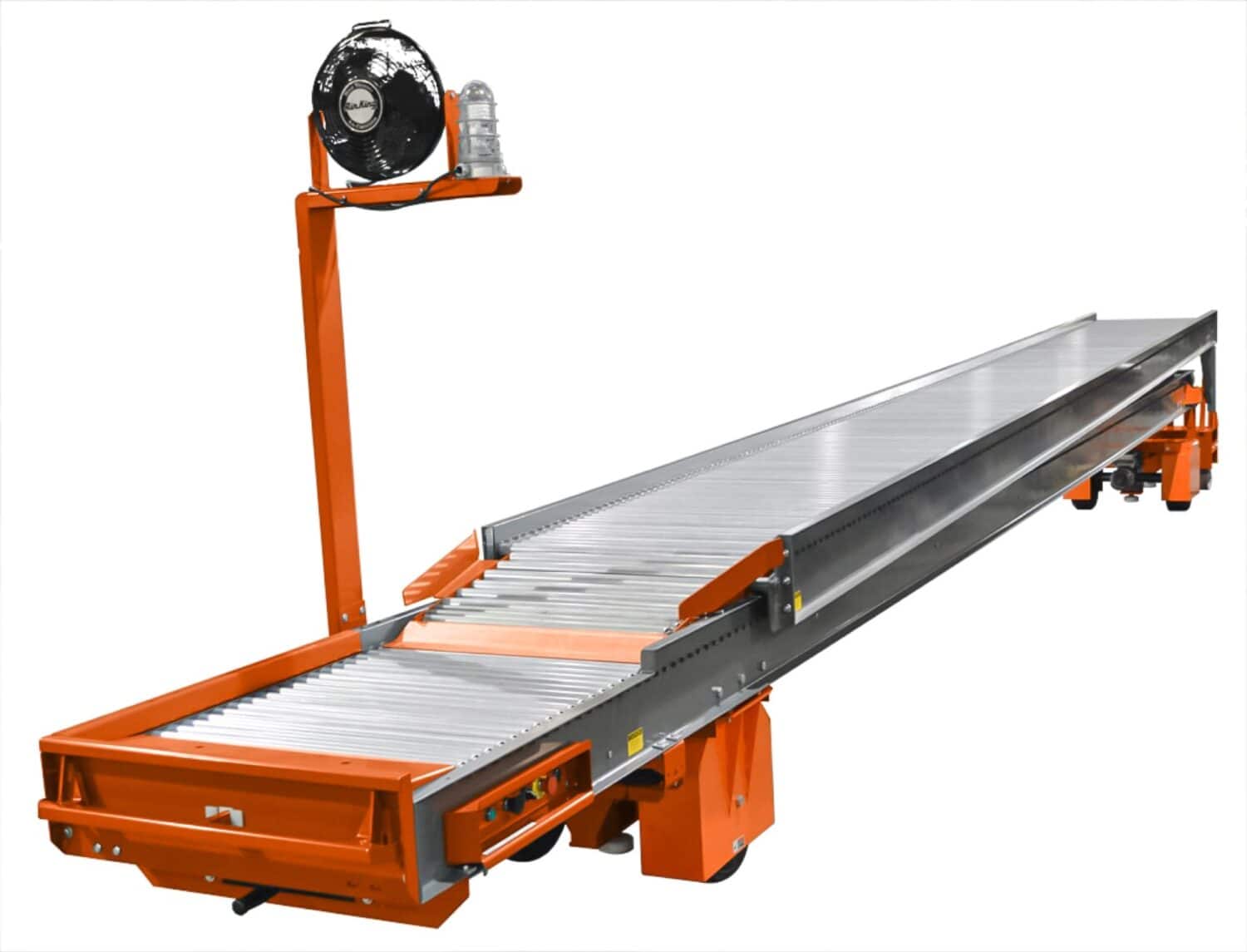
The Aftersort TL2 Extendible Telescoping Conveyor is built to withstand punishment in shipping areas that have a high degree of forklift traffic or other collision obstacles.
Aftersort Rigid Two-Stage Truck Loader
The Aftersort TL2 Extendible Telescoping Conveyor is built to withstand punishment in shipping areas that have a high degree of forklift traffic or other collision obstacles.

Advanced Features & Benefits
Incorporating our truck loading conveyors into your facility offers operational advantages across the board.
- Space-saving configuration — Designed to expand as needed and retract when not in use, our truck loaders are known to save valuable space in your warehouse.
- Increased Safety & Ergonomics — Automated features help keep your employees safe from injury and limit workplace accidents that could result in product loss. Powered drive out capabilities and emergency stops allow these trailer loading conveyors to be controlled with the push of a button.
- Heavy-duty load capacity — With 1.9-inch-diameter heavy-duty rollers, durable guard rails and 3-inch axle centers, these truck loading conveyors can handle maximum load capacities up to 3,000 pounds.
- Enhanced Durability — These loading dock conveyors are built tough, designed to withstand daily wear-and-tear and common impacts associated with industrial machinery.
Choosing the Right Truck Loading Conveyor
Selecting the right truck loading conveyor starts with understanding how products move through your shipping and receiving operation. Expected throughput, product dimensions and weights, available dock space, conveyor dimensions and load capacity can all influence the appropriate equipment for an application.
Dock and trailer conditions are important considerations as well. The distance products need to travel, trailer dimensions, loading height and existing material handling equipment can affect the conveyor configuration. Operations should also consider how frequently loading requirements change and whether a fixed, extendible or more portable solution is best suited to the work.
FMH Conveyors can evaluate these application requirements and recommend equipment based on the needs of the operation. This helps businesses select a solution suited to their products, facility layout and loading process.
Scalable & Configurable
At FMH Conveyors, we know that every business has unique hurdles and process limitations. Many times, our customers will combine different conveyor systems in a modular approach to meet desired requirements. For example, you can combine one of our standard conveyors with a mobile power assist for a more configurable, detachable solution. If floorspace is limited, you may prefer a flexible gravity conveyor for a more portable solution. Our team works hand in hand with yours to develop a long-term, scalable solution for the enhanced safety and productivity of your facility.
The right conveyor configuration depends on how the dock operates. Rigid truck loaders provide a defined path for moving products during loading and unloading, while telescopic conveyors provide additional reach into trailers. Flexible conveyors can support applications where portability or changing loading locations are priorities. Evaluating these differences can help businesses match the conveyor to their available space, product flow and day-to-day operating requirements.
Wide Range of Applications
Every warehouse environment is different, which means the right truck loading conveyor configuration will vary depending on the application.
Common industry applications include:




Truck loading requirements can vary across these applications. A distribution center may prioritize consistent product flow during high-volume shipping periods, while an e-commerce or parcel operation may need to accommodate a wide variety of carton sizes and frequent trailer activity. Third-party logistics providers may also need equipment that can support changing customer and shipping requirements.
FMH Conveyors specializes in solutions for loading and unloading operations. By considering the products being handled, dock configuration and operational requirements, FMH can help businesses identify a truck loading conveyor suited to the way their facility works.
If you have questions about any of our products or how we could work together, don’t hesitate to contact us or check out our blog. We look forward to helping you transform your truck loading operations!