
The Duravant family of operating companies serve the food processing, packaging and material handling segments.


















SupportPro Tips: Adjusting Belt Tension
08/07/2021
FMH Curved Belt Conveyors require occasional servicing of the belt tension to ensure maximum efficiency. The belt tension must be kept to a minimum on both the external and internal radius. By design, it should be possible to manually move the belt and turn the belt guide without difficulty.
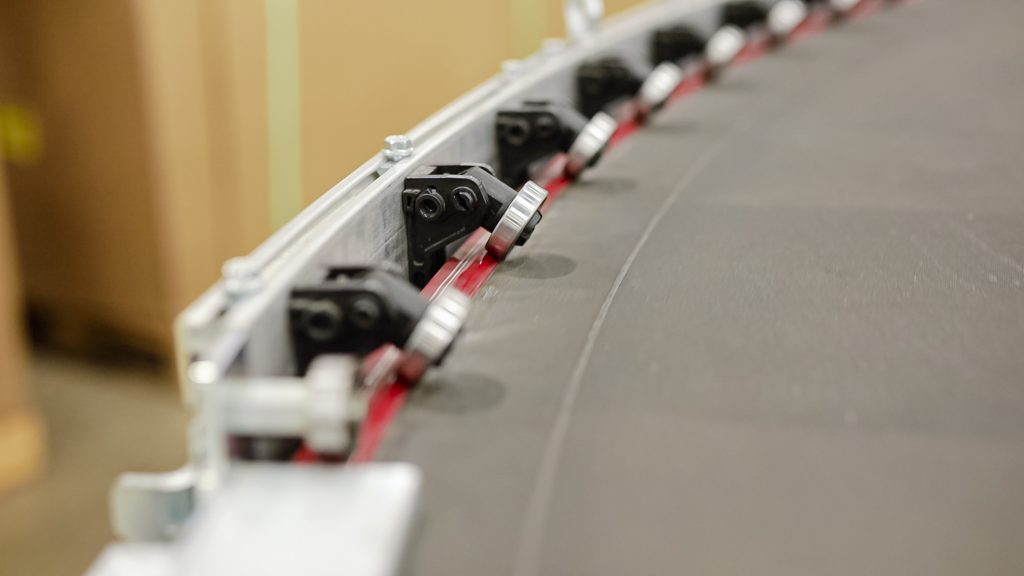
If the belt has been tensioned properly, it will lie flat against the support without forming waves or bubbles.
Before working on the unit, ensure the power is disconnected. Servicing and repair work should only be done by trained staff. Service should only take place when the machine is not operating to ensure that it cannot be started or put into motion inadvertently. Before performing maintenance or repairs on the system, ensure proper Lockout/Tagout procedures are followed.
Service and repair work should only be performed by trained personnel. Service should only take place when the machine is properly locked out to ensure it cannot be operated during planned maintenance or repair.
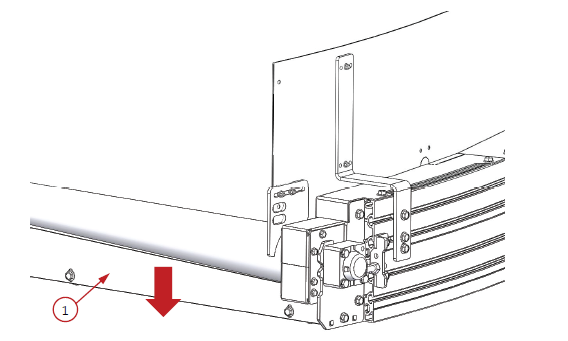
To begin, loosen the screws on the finger protection plate (as shown below) and push it down.
Next, loosen the locknut (2) of the clamping screw (3) on the inside and outside.
Loosen the screws (4) on the bearing unit on the inside and outside.
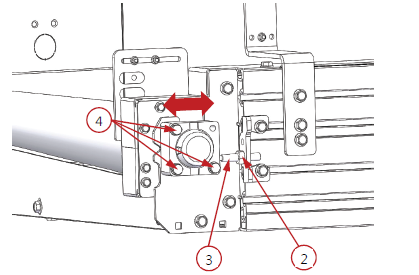
Use the clamping screw (3) to tension the belt as symmetrically as possible until there are no folds, and the belt is pulled evenly. Adjust the belt tension with a “test weight” (the maximum weight the curve conveyor is designed for), ensuring that the equipment can operate without any slipping between the belt and pulleys.
When doing this, it is important to ensure the belt tension is not set too high or too low. This could lead to problems when adjusting the belt path. Excessively high belt tension can also cause the pulley bearings and conveyor belt to be damaged.
Before the system is restarted, it must be ensured that all safety devices are fully fitted and functional.
To check for proper adjustment, run the belt for 10 minutes and ensure it is running smoothly and centered. Tighten the locknuts and screws again. Secure the finger protection plate again with a gap of less than 5 mm. Manually turn the belt, ensuring there are no obstructions.
Once work is complete, connect power back to the unit.
Common Indicators That Belt Tension Needs Adjustment
Even when a curved belt conveyor is running, small performance changes can be a sign that belt tension is no longer where it should be. Catching these early can help prevent unnecessary wear on the belt, pulleys, and bearings.
Common signs belt tension needs adjusting include:
- The belt drifts toward the inside or outside radius during operation.
- Visible belt distortion, such as waves, wrinkles, or bubbling.
- Abnormal noise or vibration, including squealing, rubbing, or excessive vibration.
- Reduced throughput under load or product slipping during transfer.
- Increased motor load or strain on drive components.
If you notice any of these symptoms, it’s a good time to verify belt tension using a consistent method such as a deflection-based check or a belt tension gauge.
Best Practices for Maintaining Proper Belt Tension Over Time
Knowing how to measure belt tension is important, but keeping it consistent over time is what helps reduce repeat issues and downtime. A basic inspection and measurement routine can help support reliable conveyor performance.
Best practices for proper belt tension include:
- Perform weekly visual inspections for belt waves, wrinkles, or uneven tracking.
- Observe belt performance under load to confirm consistent traction and product movement.
- Watch for belt drift, slipping, lagging, vibration, or unusual noise during operation.
- Inspect pulleys regularly for debris buildup, wear, or inconsistent belt contact.
- Check bearings for smooth rotation, noise, resistance, or heat near drive components.
- Clean belt and pulley surfaces to prevent debris from affecting grip and tension stability.
- Record belt tension measurements and any adjustments in a maintenance log.
- Measure the same belt span area each time to improve accuracy and consistency.
- Review tension history to identify patterns before they turn into recurring failures.
Tracking when and how often tension changes are needed can reveal patterns like component wear or environmental factors impacting belt performance. Proactive checks help keep tension stable, improve conveyor reliability, and reduce unexpected downtime.
When to Contact SupportPro for Professional Assistance
In many cases, belt tension adjustments can be handled in-house. Some issues may point to a deeper alignment or mechanical problem that requires experienced support.
Consider reaching out for professional assistance on belt tension issues when you notice:
- Persistent belt drift even after repeated adjustments.
- Tension instability, where belt performance changes quickly after re-tensioning.
- Tracking problems that only occur under full load conditions.
- Unusual vibration, noise, or heat near the drive or tail pulley.
- Bearing noise or resistance during rotation.
- Irregular belt movement during operation.
- The belt is near or past its recommended service life and may need replacement instead of adjustment.
This simple maintenance procedure will provide your curved belt conveyor with a longer life and will reduce downtime on equipment.
SupportPro’s factory-trained technicians can help diagnose the cause of repeated tension issues, verify alignment, inspect components, and recommend corrective action to restore optimal belt performance. To set up a PM visit with one of our factory-trained technicians, call 1-844-364-7378 or click here to contact our team for more information on our products and services.