
The Duravant family of operating companies serve the food processing, packaging and material handling segments.


















How to Identify Safety Non-Compliance in Conveyor Systems
28/05/2026
At FMH Conveyors Ltd, safety is engineered into every solution from the ground up. We design conveyor systems that don’t just comply with current machine safety legislation - they’re built to exceed it, helping our customers create safer, smarter and more reliable operations every day.
1. Why Safety Standards Matter
European (EN) and International (ISO) standards exist to provide a clear framework for designing safe and reliable machinery. They establish a consistent “blueprint” that ensures products, systems, and processes meet minimum safety and quality requirements across different regions.
Key objectives of these standards include:
• Protecting operators and maintenance personnel
• Ensuring machinery operates safely and predictably
• Reducing the risk of injury and legal liability
Examples include:
• EN 619:2022 - Safety requirements for conveyor systems
• BS EN ISO 13849-1:2023 – Safety related parts of control systems
• BS EN ISO 13850:2015 - Emergency stop design principles
It is important to understand that these standards define minimum requirements, not best practice ceilings.
2. Legal Responsibilities
Compliance with safety standards is not optional.
When a manufacturer issues a Declaration of Conformity, they are legally confirming that:
• The machine complies with all applicable directives and standards
• A complete technical file exists and is available for inspection
Failure to comply can result in legal action.
In addition, modifying machinery after installation - such as removing or disabling safety systems is a criminal offence in the UK and EU, particularly when it exposes operators to risk.
3. Common Causes of Non-Compliance
In practice, non-compliance often arises due to:
• Cost reduction pressures
• Simplified design decisions
• Aesthetic considerations overriding safety
• Poor understanding of standards
• Post-installation modifications by operators
These issues can lead to unsafe machinery being placed into service
4. How to Identify Non-Compliance
4.2 Emergency Stop Design
Emergency stops (e-stops) are a critical safety feature and must comply with strict design rules.
According to BS EN ISO 13850:2015 and associated standards:
✅ A compliant emergency stop must:
• Be red in colour
• Be mounted on a yellow background
• Be clearly visible and accessible
• Be operable with an open palm (not obstructed)
🚫 Common non-compliance indicators:
• Incorrect colours (e.g. black buttons used as emergency stops)
• Text such as “Emergency Stop” printed on or around the actuator
• Physical obstructions (guards, recesses, or overhangs) preventing quick activation
• Placement in awkward or hard-to-reach positions
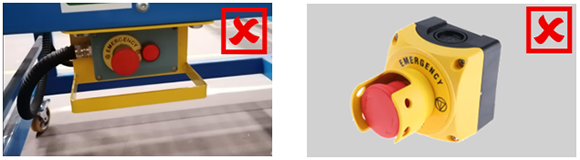
Any of these issues may indicate broader safety design failures.
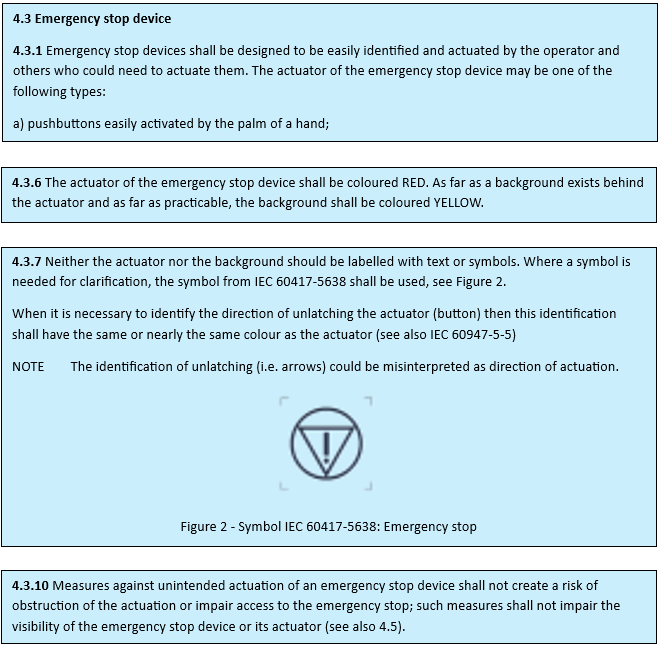
4.2 Accessibility and Positioning
Emergency stops must be positioned so they are:
• Easily reachable
• Located within a suitable height range
Buttons mounted too low (for example, beneath conveyor frames) may not comply with standards.
Practical guidance: If a control feels awkward or difficult to reach, it is likely unsuitable and may be non-compliant.

4.3 Colour and Control Separation
Standards such as EN 60204-1:2018+A1:2025 require clear differentiation between controls.
Key rules:
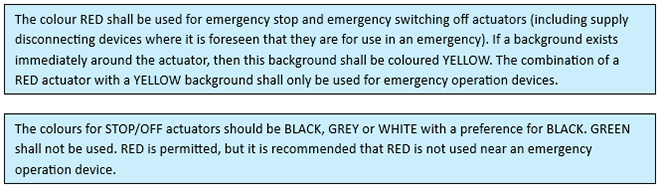
• Emergency stop buttons must be red on yellow
• Standard stop buttons may also be red, but:
They must not be placed next to emergency stops in a way that causes confusion
🚫 A common issue:
• A red stop button located directly beside a red emergency stop
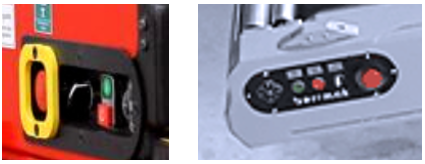
This creates ambiguity and is likely non-compliant.
5. Conveyor-Specific Safety Risks
Conveyor systems introduce additional hazards, particularly around:
• Moving belts
• Drive drums
• In-running nip points (drawing-in hazards)
5.1 Drawing-In Hazards
Under EN 619:2022, dangerous moving parts must be properly guarded.
Requirements:
• Maximum gap sizes typically ≤ 5 mm
• Guards must be rigid and secure
• Flexible or damaged guards are not acceptable
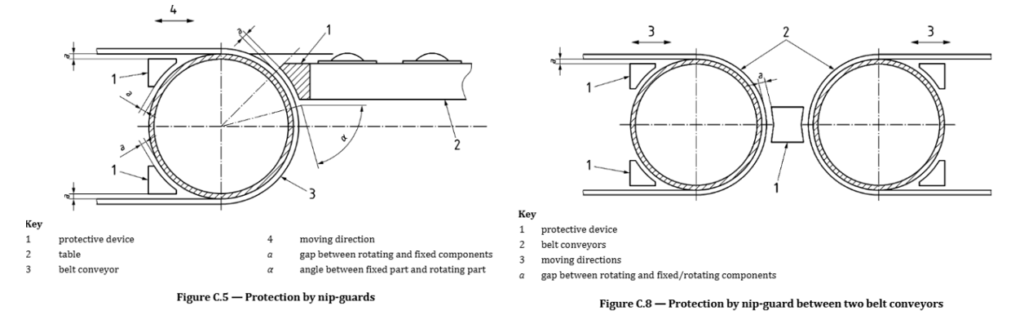
Warning signs of non-compliance:
• Large gaps near belt or roller contact points
• Missing or damaged guarding
• Easily deformable barriers
These hazards can cause severe injuries, including entrapment.
5.2 Telescopic Conveyor Risks
Telescopic conveyors often present recurring safety issues.
Common problems:
• Emergency stops mounted:
- At an angle
- Under steel overhangs
- Recessed into frames
• Missing yellow backgrounds on e-stops
• Obstructed access preventing palm activation
• Confusing arrangement of stop controls
Critical requirement:
Modern telescopic conveyors must include a wedge-shaped guard to prevent access to the end pulley as the machine retracts and the belt angle increases.
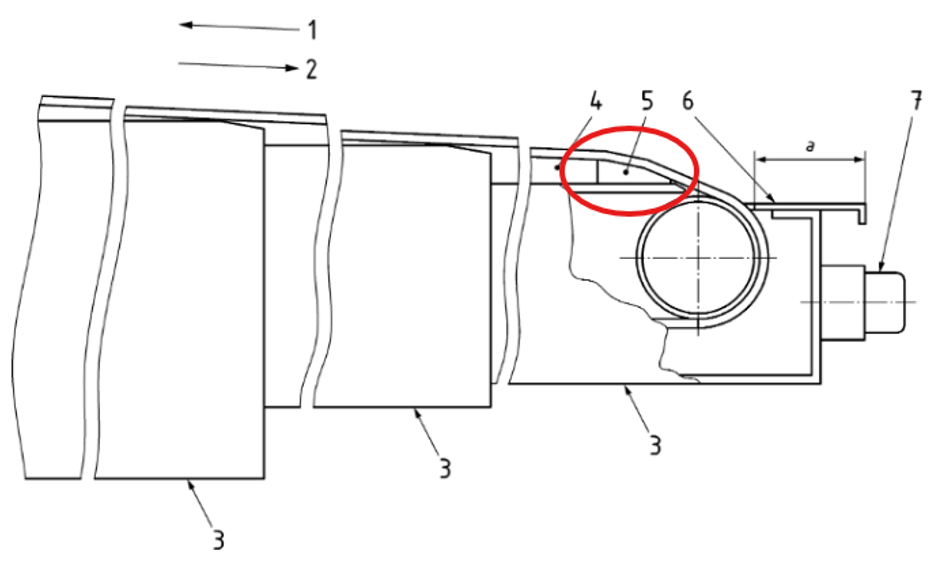
🚫 Absence of this feature indicates non-compliance with current standards.
6. Warning Signs of Poor Compliance
When assessing machinery, look for multiple indicators:
• Emergency stops below recommended height
• Incorrect colours or markings
• Obstructed or recessed controls
• Missing guarding around moving parts
• Poor overall design consistency
⚠️ Important: One failure often suggests others. Non-compliance is rarely isolated.
7. Readily Available but Non-Compliant Components
It is possible to purchase components that do not meet required standards, even from reputable suppliers. Responsibility lies with:
• Designers • Integrators • Manufacturers
not the component supplier alone. Always verify suitability against current standards before use.
8. Key Takeaways
• Safety standards define minimum legal requirements, not optional guidance
• Emergency stop design is highly regulated and easy to assess visually
• Conveyor systems present significant risks if not properly guarded
• Small design issues often indicate wider safety concerns
• Compliance must be maintained throughout the machine’s lifecycle
Conclusion
Ensuring compliance with machinery safety standards is both a legal obligation and a fundamental duty of care.
Seemingly minor issues such as incorrect button colour, poor positioning, or inadequate guarding can expose workers to serious risk and may indicate deeper design flaws.
Regular inspection, awareness of standards, and a proactive approach to safety are essential to prevent incidents and ensure equipment remains fit for use.
You can download a PDF of this white paper document here